Coat Check: Winning the Small War Between Winter Wool and Your Makeup
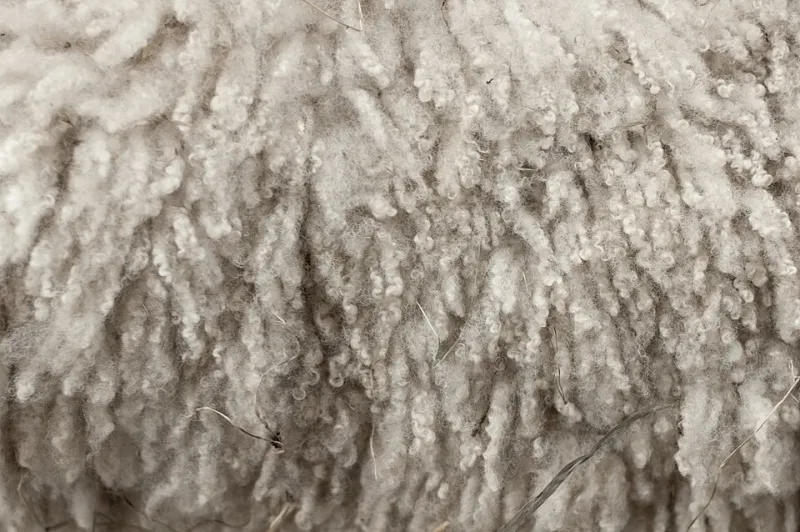
Photo: Rob, CC BY 2.0, via Wikimedia Commons
There is a specific kind of heartbreak that happens at ten to nine on a wet Tuesday. Base done, blush placed, lip lined and filled — then the coat goes on, the scarf winds twice round the neck, and by the bus stop your face has been quietly redistributed onto wool.
It is not your fault, and it is only partly the coat's. Winter transfer is a small physics problem: warm skin, oil-based product, pressure, friction and a fibre with a surface that loves pigment. Put all five together on a drizzly walk to the station and something has to give.
So we asked the people who see the aftermath every week — a dry cleaner on Cowbridge Road East in Cardiff, a makeup artist working out of a studio above a bakery in Caernarfon, and a textile technologist who spent two decades in Welsh woollen mills — what is actually going on, and what is worth buying.
Wool is not the villain you think
The instinct is to blame the coat. The truth is stranger. Brushed wool, melton and tweed all carry a slightly raised, scaly surface at fibre level, which is precisely what makes them warm and precisely what makes them hungry. A tight, smooth gabardine will pick up far less colour than a soft brushed scarf.
The bigger offenders are usually the scarf and the lining. Polyester lining builds static, static lifts powder, and powder settles on the collar. A wool scarf worn directly against the jaw takes up foundation the way a blotting sheet does, one warm breath at a time.
The technologist's summary was blunt: wool has scales, skin has oils, and pressure does the rest. Wool does not need to be treated as an enemy. It needs to be treated as a surface with an appetite.
The three transfer zones
Every winter mishap happens in one of three places.
The scarf collar. Under the jaw, along the sides of the neck, and wherever a scarf tucks into a coat. Foundation and bronzer territory — and worse when you have powdered heavily, because loose powder travels further than you think.
The lapel and shoulder. Lipstick and cream blush, mostly, from pulling a collar up or dragging a bag strap across a cheek. This is the origin of the faint peachy smear on a grey coat that appears in the second week of December and baffles everyone.
The inside cuff and pocket. Less visible, more annoying. Cream from hands, tinted balm, the residue of a hand cream that had not quite sunk in before you left the house.
What makeup artists change when the coat comes out
Three shifts, none of them dramatic.
First, they thin the base. A rich, oily foundation is a magnet under pressure. Lighter coverage built in two thin layers sits closer to the skin and moves far less than one generous layer.
Second, they stop powdering the whole face. Powder in the T-zone, yes. Powder everywhere, no. Powdered cheeks plus wool equals dusting. If you want colour, a cream or gel formula that sets down beats a powder blush worn under a scarf.
Third, they swap the bullet lipstick for something that sinks in. A classic lipstick sits on top of the lip and leaves on everything it meets. A stain, or a tinted balm with liner underneath, gives colour that survives a mug of tea, a hymn and a windy car park.
The Caernarfon artist's rule for November: anything I would not trust under a scarf, I do not trust at all.
The dry cleaner's rescue plan
This is where most of us make it worse. The instinct is to rub. Do not rub.
On wool, blotting lifts colour; rubbing drives pigment into the fibre and can felt the surface into a permanent fuzzy patch. Blot with a clean white cloth, working from the outside of the mark inwards so you do not spread the edge. Skip hot water. Skip the tumble dryer. And never iron over a mark — heat sets it, and a shiny pressed-in lipstick print is a much sadder thing than a loose one.
The Cardiff cleaner's advice for anything beyond a faint smear was refreshingly honest: bring it in, say what it is, and say how long it has been there. Lipstick, foundation and tinted moisturiser all respond to different treatments, and a coat that has been sitting at home with a solvent for three days is a far harder job than one that arrived the same week.
Scarves are mostly washable: cool water, gentle detergent, no wringing, dry flat. If the scarf is the sacrificial layer, let it be. A scarf can be replaced for a fraction of the price of a coat clean.
An under-thirty pound coat-proof kit
You do not need a new routine, just a small bag by the door.
- Blotting papers (around £3). Press, do not wipe, before the coat goes on.
- Micellar water and cotton buds (around £5). For the inner collar and the corner of the mouth.
- A pressed translucent powder (around £8). T-zone only, applied with a small brush rather than a puff.
- A lip stain (around £7). Cheaper than a coat clean, and it stays put.
- A cotton or silk scarf (from £6). Natural fibres generate far less static than polyester, so less powder migrates upwards.
- A fast-absorbing hand cream (around £4). Give it two minutes before gloves go on.
The morning order that actually works
Base first, then five minutes of doing something else — kettle, teeth, shoes. Blot. Powder only where you shine. Cream colour on the cheeks, stain on the lips. Scarf on last, and lift the coat over your head rather than dragging it across your face.
If it is properly blowing a hoolie, tuck a thin cotton scarf between your jaw and the wool one. It looks intentional, and it takes the hit. Small adjustments, warm coat, intact face — the sort of quiet win that makes a wet walk to work feel almost civilised.