High Ceilings, Quiet Voices: The Welsh Chapels Finding a Second Life as Salons
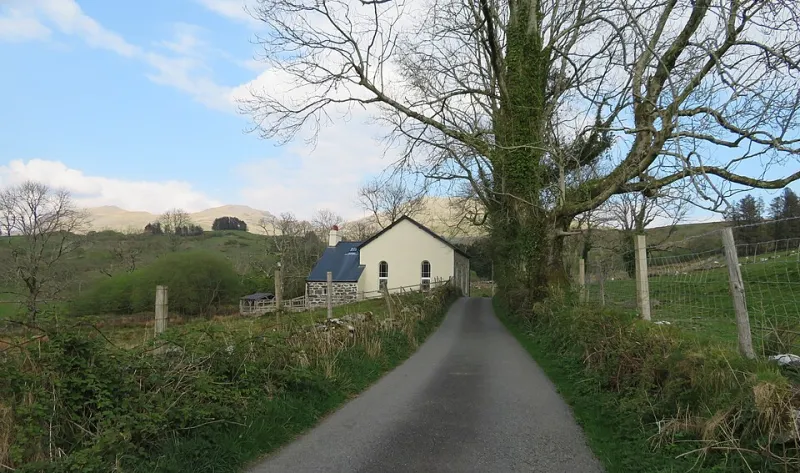
Photo: Llywelyn2000, CC BY-SA 4.0, via Wikimedia Commons
There is a particular sort of quiet inside a Welsh chapel. Not silence exactly — more a held breath. Thick walls, high ceilings, the ghost of a harmonium. Walk into one that has been turned into a salon and you notice it straight away: the hush is still there, only now it smells faintly of rosemary oil and clean towels.
This is not a new story, but it is a growing one. Up and down the country, former chapels, vestries and Sunday schools are finding second lives as hair salons, skincare studios and nail bars. Some are grand, with arched windows and galleries. Others are small, single-room affairs with a kettle in the corner. What they share is a certain atmosphere — and owners who are careful about what they keep.
The Chapel That Kept Its Hymn Board
Bethan Rees runs Y Ffau, a two-chair salon in a former Calvinistic Methodist chapel just outside Cardigan. She bought the building in 2021 after years of renting a unit on the high street. “Everyone thought I was mad,” she says. “The roof needed work, the pews were damp, and there was a dead pigeon in the pulpit. But I stood in the middle of that room and thought: this is the calmest place I’ve ever been.”
She kept the hymn board. It hangs above the mirror, still showing numbers from the last service. She kept the original slate floor, too, though it now has underfloor heating beneath it. The pews were too far gone to save, so a local carpenter turned the soundest timber into a long bench by the window and a small shelf for products. “I wanted people to feel the history without sitting on something that would give them splinters,” she says.
Her product shelf is deliberately local: a lanolin balm from a farm near Newcastle Emlyn, a clay mask mixed by a maker in Aberystwyth, and a Welsh-made hair oil she decants into amber bottles. “It’s not about being patriotic for the sake of it,” she says. “It’s that I can ring these people up. If a client asks what’s in something, I know the answer.”
The Sunday School With a Softer Voice
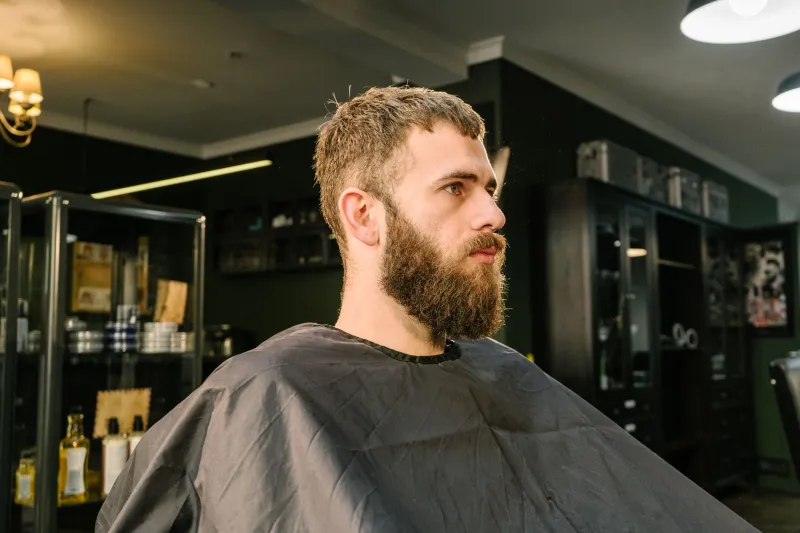
In Pontypridd, Rhys Llewellyn opened The Vestry in an old Sunday school hall three years ago. It is now a barbershop and skincare studio — an unusual pairing, he admits, but one that works. The hall’s high windows let in a surprising amount of light, and the original parquet floor has been sanded back to a soft honey colour.
“The thing I didn’t expect was how differently people behave,” he says. “In a normal barber’s, everyone talks over each other. Here, people lower their voices. It’s like the building asks them to.” He has leaned into that. There is no television, no loud radio. The playlist is mostly Welsh folk and ambient piano. Clients are offered tea in proper cups, not paper.
Rhys kept the hall’s stage — a low wooden platform at one end — and uses it for skincare appointments. “It sounds odd, but sitting up there feels a bit special,” he says. “You’re not in a corridor. You’ve got space.” He sources his beard oils from a maker in Merthyr Tydfil and his face cloths from a textile studio in Rhondda. The reception desk is an old chapel table he found in a skip and sanded down himself.
The Small Studio That Feels Like a Deep Breath
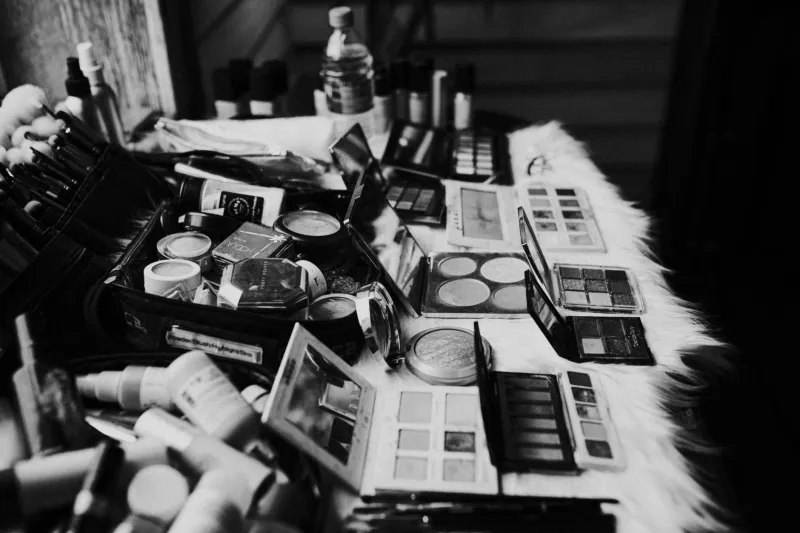
Nia Hughes runs Cwtch Skincare in a former vestry in Llangollen. It is one room, one treatment bed, one sink. She sees three clients a day, maximum. “I wanted to build the opposite of a clinic,” she says. “No beeping machines, no hard lighting, no one asking you to buy a course of six.”
The vestry had been used as a storage space for years. Nia whitewashed the walls, kept the original wooden door with its heavy iron latch, and added a small wood-burner. The only nod to modern skincare is a neat row of amber bottles on a slate shelf. She makes most of her own products — a chamomile cleanser, a honey and oat mask, a balm she describes as “chapel-proof” because it survives a walk back to the car in the rain.
“First-timers sometimes apologise for not knowing what to book,” she says. “I always say: that’s my job, not yours. You just turn up.” She has a short consultation form, a pot of tea, and no expectation that anyone will make conversation. “Some people want to talk. Some want to close their eyes. Both are fine.”
What to Expect When You Book a Converted Chapel
If you are booking a salon in a former chapel or Sunday school, here is what is worth knowing.
- Check the access. Old buildings can have steps, narrow doors or uneven floors. If you have mobility needs, ring ahead. Good owners will be honest and helpful.
- Expect a different pace. These spaces tend to be quieter. That is the point. You may not get the buzzing salon chatter — and that is often why people book.
- Ask about products. Many of these owners stock locally made lines. If you have sensitivities, ask what is in them. They usually know.
- Bring a layer. High ceilings and stone walls can be beautiful and chilly. Many owners have added heating, but a jumper is never a bad idea.
- Don’t be surprised by the history. You might sit on a pew, hang your coat on a hymn-board hook, or wash your hands at a font-turned-sink. It is part of the charm.
A Quiet Chair, A Warm Welcome
What strikes you across all three spaces is not the architecture, impressive as it is. It is the care. The owners have not stripped out the character and replaced it with glossy minimalism. They have kept the bones — the slate, the timber, the hush — and built a welcome around them.
“People come in and say it feels like a deep breath,” says Nia. “That’s the best compliment I can imagine.”
In a year when so much of beauty feels fast and loud, a quiet chair in an old chapel feels like a small act of resistance. And in Wales, we have plenty of chapels. Perhaps we have plenty of quiet chairs, too.