Nain's Cold Cream and Other Small Inheritances
Every Welsh family, it seems, has a drawer that refuses to be decluttered. It is usually the top one in a spare bedroom, or the shallow one under a dressing table, and it smells faintly of face powder, mothballs and chapel-hall hand cream. Inside: a tin of cold cream with a dented lid, a lipstick bullet worn to a slant, a compact mirror with a loose hinge, a brooch wrapped in tissue, maybe a tiny bottle of scent that has long since turned amber. These are not antiques in the formal sense. They are small inheritances.
In 2026, younger readers are not simply inheriting these objects; they are putting them back to work. The cold-cream tin becomes a jewellery dish. The brooch becomes a bag charm. The compact gets a polish and a place in a handbag. It is a quiet shift, and a very Welsh one: keeping the story, losing the clutter, and giving something old a sensible new job.
The Drawer That Refuses to Be Decluttered
Beauty heirlooms are rarely valuable in the way a watch or a ring is valuable. Their worth is in the hand that used them. A grandmother's cold cream tells you she believed in a simple routine long before routines became content. An auntie's lipstick — always the same shade, always bought in the same shop — is a reminder that style can be loyal rather than loud. A brooch from a jacket that no longer fits can still catch the light on a canvas tote.
What makes these objects Welsh is not a label. It is the context. They come from house clearances in Carmarthenshire, from Cardiff terraces, from a dressing table in a bungalow near the coast. They were bought at a market stall, a chemists, a salon on the high street. They were used on ordinary mornings, not saved for best. That everydayness is exactly why they feel worth keeping.
What Actually Gets Kept
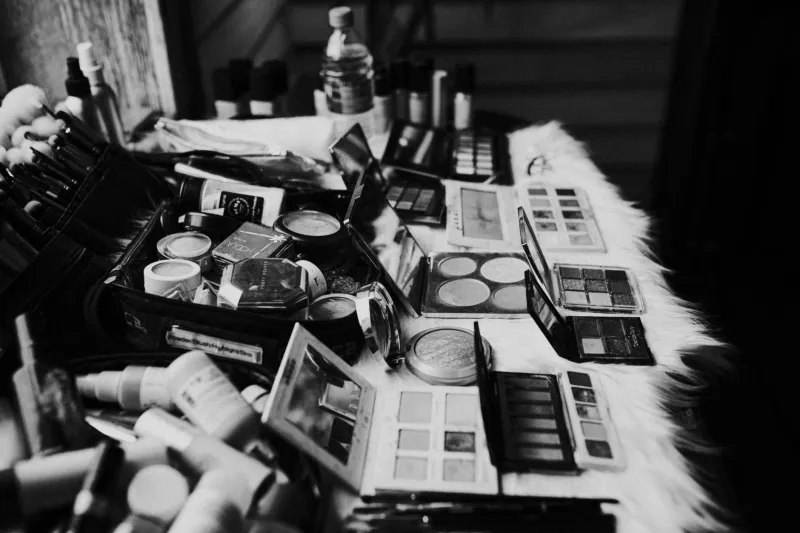
The keepsakes tend to fall into four groups. First, tins and pots: cold cream, vanishing cream, talc, lip salve. Second, colour: old lipsticks, powder compacts, eyeshadow palettes with mirrored lids. Third, scent: small perfume bottles, sometimes still half full, often better as decoration than wear. Fourth, adornment: brooches, hair slides, scarf clips, a string of pearls that has lost its clasp.
There is also the category nobody talks about: the things kept out of guilt. The cracked powder compact. The lipstick in a shade nobody would wear now. The perfume that smells like a 1970s sitting room. It is fine to let those go. An heirloom should earn its drawer space, not police it.
A Small Guide to Cleaning Without Ruining
Start gently. Most vintage beauty items are not built for hot water or harsh cleaners. For metal tins and compacts, use a barely damp cloth with a drop of mild washing-up liquid, then dry immediately with a soft cloth. Do not soak anything with a mirror, a hinge or a printed label. A cotton bud is your friend around edges.
If an old cream or lipstick is still inside, do not assume it is usable. Cosmetics age, and old creams can harbour bacteria. Keep the container, bin the contents. If you want to keep a lipstick for sentiment, scrape away the top layer, wipe the bullet with surgical spirit and let it dry — but if it smells waxy, crayon-like or sour, let it go. Your skin is not an archive.
For brooches and metal clips, mild soap and a soft brush are usually enough. Dry thoroughly, especially around the pin. For perfume bottles, do not shake or refill them with modern scent; the old stopper and plastic seals may not cope. Keep them out of direct sunlight and enjoy them as small glass objects.
Storage That Lets Them Breathe
A sealed plastic box can trap moisture, which is the enemy of metal and mirror backing. Use a wooden drawer, a fabric-lined box or a shallow tray in a dry room. Wrap brooches in acid-free tissue or soft cotton, and keep scent bottles away from radiators. If you are storing a compact with a mirror, add a small silica sachet nearby — not touching the mirror — and check it now and then.
Labels matter. Write a small note in pencil: whose it was, where it came from, roughly when it was used. Future relatives will thank you. A tin with a name and a street is a story. A tin without one is just a tin.
Wear It, Don't Worship It
There is a difference between preserving an object and embalming it. A brooch pinned to a coat lapel, a compact in a handbag, a pretty tin holding rings by the sink — these are good second lives. A cold-cream pot on a bathroom shelf, slowly rusting, is not. Use the things that can take it. Retire the things that cannot.
Bag charms are the easiest conversion. A small brooch or clip can be attached to a strap with a proper clip-on converter, no soldering required. A powder compact can live in a drawer as a mirror for quick lipstick checks. A scarf clip can hold a rolled hem or gather a plain tote. The aim is not to make a museum display. It is to let the object sit in your daily life without fuss.
Modern Welsh Buys With the Same Handed-Down Feel
If your family drawer is thin on heirlooms, you can still build the same feeling with new pieces. Look for Welsh makers who favour refillable tins, small-batch balms, textile pouches and old-fashioned apothecary styling. Myddfai's traditional Welsh lavender hand creams and balms have that dressing-table look. Rhug Wild Beauty offers small-batch oils and creams with a farm-to-shelf story. Welsh Lavender hand creams and soaps feel quietly old-fashioned in the best way. At Cardiff Market and Hay-on-Wye, indie stalls often sell solid perfumes, pretty compacts and brooches that could become tomorrow's small inheritances.
The test is simple: would you still want it in ten years if the trend moved on? Buy for the object, not the packaging alone. Choose a tin you would actually refill, a brooch you would actually wear, a scent you would actually finish.
The Label Matters More Than the Price
A beauty heirloom does not have to be old, Welsh or expensive. It has to be specific. The best ones are the ones with a story attached: the lipstick bought for a first job, the hand cream that lived in a coat pocket, the brooch worn to a wedding. In 2026, the point is not to keep everything. It is to keep the right things, clean them kindly, store them sensibly and let them be used again. Nain's cold cream tin does not need to hold cold cream. It needs to hold something worth passing on.