The Other Side of the Jar: Why Welsh Beauty Labels Are Speaking Twice
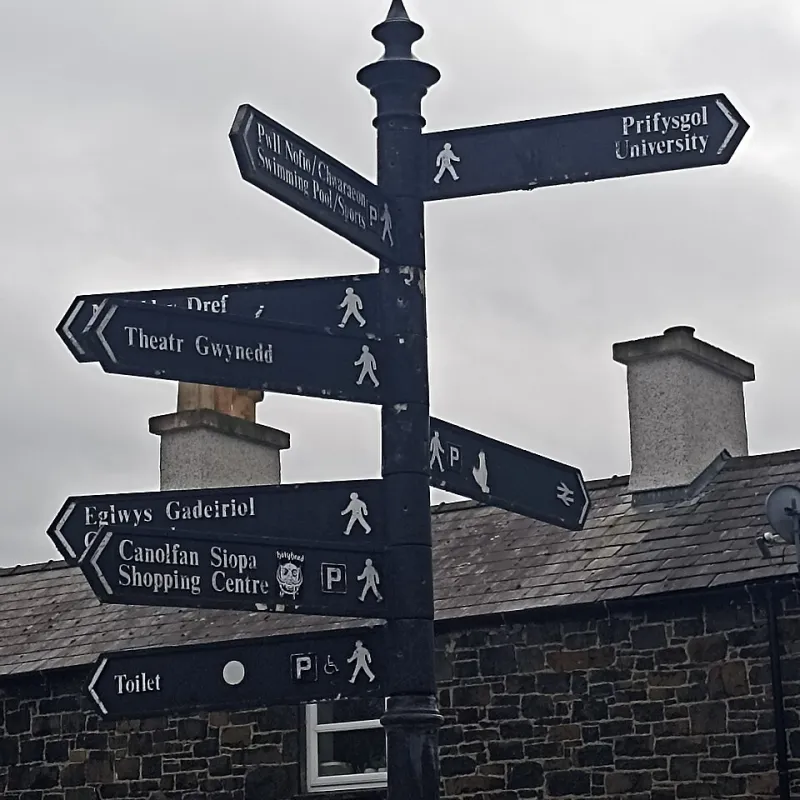
Photo: Melenn14, CC0, via Wikimedia Commons
Walk into an independent health shop in Carmarthen, or a makers' market in Cardigan, and you'll notice it on the shelf: two languages, side by side. Not a token word on the front, not a dragon stamped on the lid — but ingredients, directions and brand stories written in Cymraeg as well as English. It's a quiet shift in Welsh indie beauty, and it says more than any slogan could.
Why a Jar Says Two Things
For a small Welsh brand, bilingual packaging is rarely a marketing department's idea. More often it starts with the person making the stuff. They live here, their customers live here, and the language is part of the everyday. Putting 'eli' next to 'balm' or 'sebon' beside 'soap' isn't a statement about heritage; it's just how the label should read.
There's policy in the background, too. Welsh has official status in Wales, and the Welsh Government's Cymraeg 2050 ambition aims for a million Welsh speakers. That has nudged public bodies and funded projects, but private cosmetics brands aren't required to print Welsh. When they do, it's a choice — and that's exactly why it carries weight.
Not Decoration: What a Welsh Label Actually Does
The difference between a bilingual label and a souvenir is function. On a genuinely bilingual pack, Welsh appears where it matters: the ingredient list, the directions, the safety warnings, the brand's address. The English isn't a translation bolted on at the end; both languages do the same job.
That matters for shoppers who live in Welsh-speaking households, and for those learning. A serum that tells you how many drops to use in Welsh as well as English is a small act of hospitality. It says: you're expected here. It also keeps the language in the bathroom, which is where most of us actually read labels — squinting, half-awake, trying to remember whether this is the morning one.
There's a commercial upside, too. Independent Welsh brands often sell through farm shops, delis and makers' markets where the customer is local and the story matters. A bilingual label signals that the product wasn't dreamed up in a London studio and shipped in. It's a shorthand for provenance that a flag can't fake.
The Shopper's Tell: How to Spot the Real Thing
If you're browsing from outside Wales — or you're in Wales and want to buy well — look past the front of the jar.
- Check the back. Are the directions and ingredients in Welsh as well as English? If Welsh only appears in the product name, treat it as design, not substance.
- Look for a Welsh address. A responsible-person address in Wales, or 'Wedi'i wneud yng Nghymru' (made in Wales), is a better clue than a dragon.
- Read the scent names. Welsh words for landscape — 'coedwig' (forest), 'glaw' (rain), 'môr' (sea) — often appear on indie fragrance and balm ranges. That's fine, as long as the rest of the pack is bilingual too.
- The boring bits still count. A batch code, the PAO symbol (that little open jar) and a proper ingredient list should be there whether the label is in one language or two.
None of this is about gatekeeping. It's about not paying a premium for a word that's been borrowed for the aesthetic.
What It Signals on the Shelf
For Welsh shoppers, bilingual packaging is a small recognition — a product that assumes you might speak the language rather than treating it as a performance for visitors. For UK readers, it's a useful filter. Welsh indie beauty has grown quickly, and with that comes the inevitable handful of brands using 'Cymru' as a badge while sourcing and making elsewhere. Younger makers tend to be the least self-conscious about it: they'll put the Welsh on the back panel without a paragraph explaining why.
The honest brands are also the least shouty. They'll tell you where the balm is made, who makes it, and what's in it — in both languages, because that's the label they'd want to read themselves.
The Practical Side
Bilingual print isn't free. Extra translation, extra artwork, extra plate changes on a short run of 500 jars — it adds up for a one-person brand. Some makers start with the front and back panels and add Welsh to the leaflet later. Others do the whole thing from day one. Neither approach is wrong; what matters is consistency.
If you're buying online, the product page is part of the label. Look for an ingredients list, a maker's story and a UK address. A bilingual jar with an English-only website isn't a scandal, but it's worth asking why.
Where It Leaves the Rest of Us
The rise of Cymraeg on Welsh beauty labels isn't a trend to be discovered and then abandoned when the next aesthetic arrives. It's a sign that indie beauty in Wales is maturing — making for its own market first, and letting the rest of the UK catch up. That's a healthier shelf to shop from, whether you speak Welsh or not.
Next time you pick up a balm in a Welsh market town, turn it over. If both languages are working for their living, you're probably holding something worth taking home.